
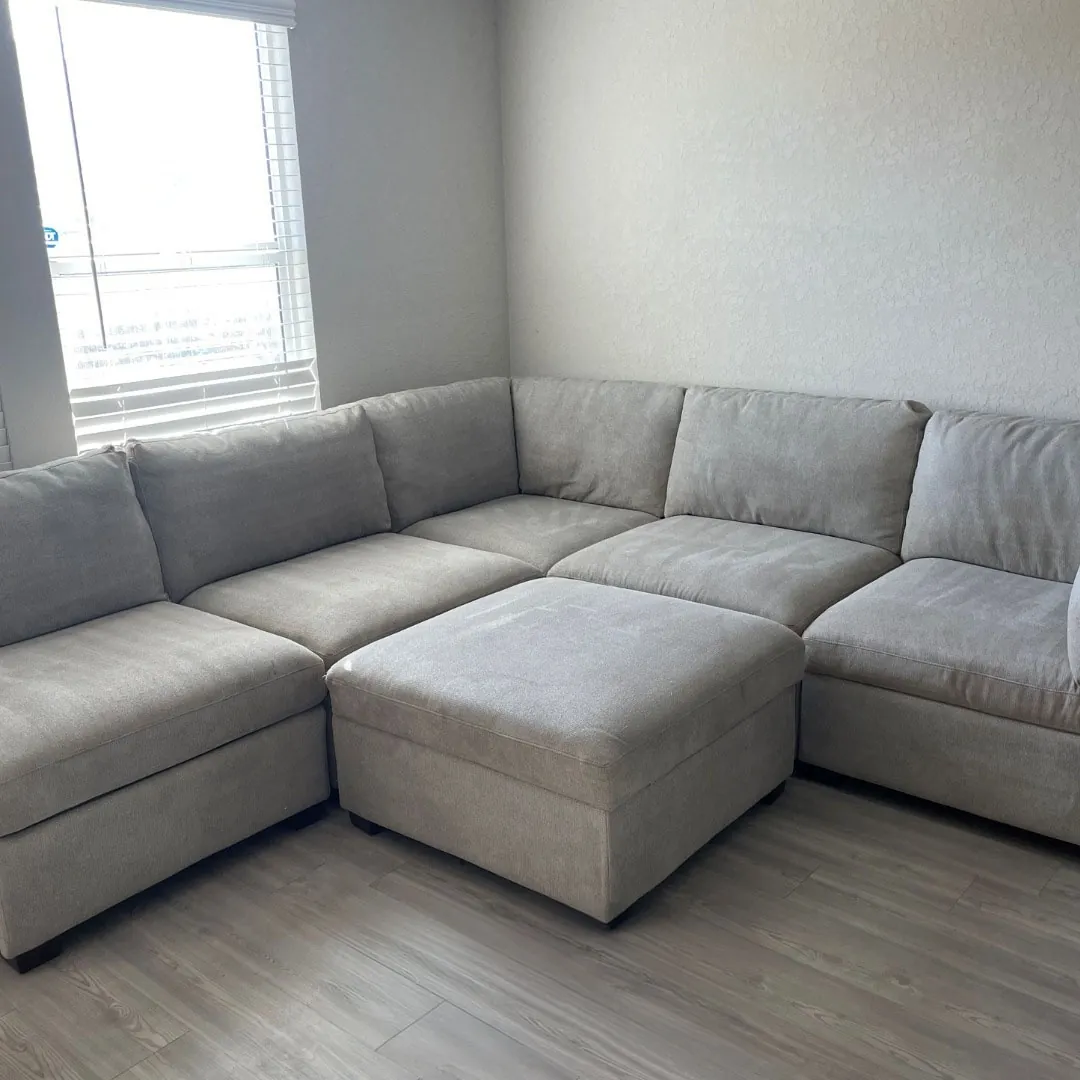
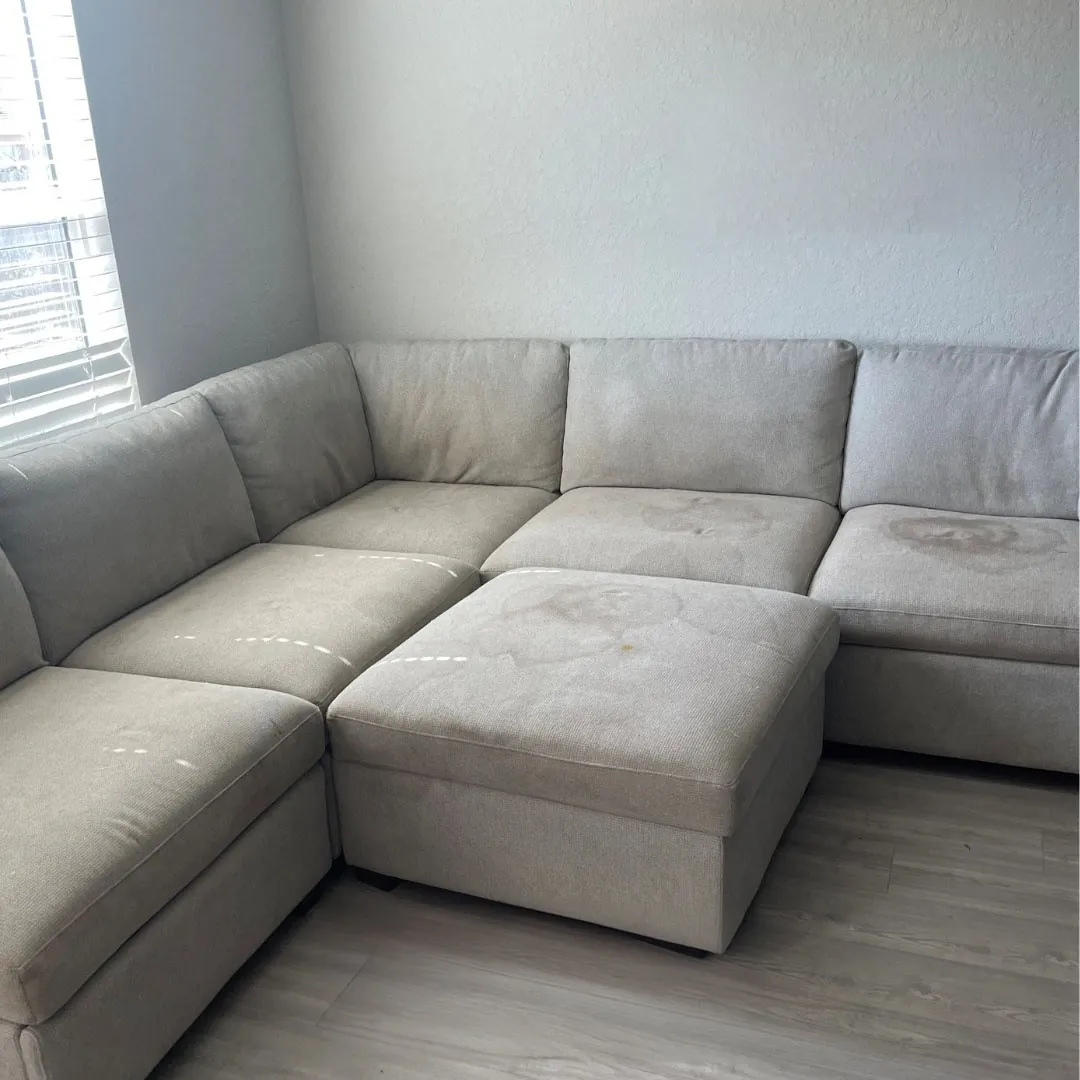
From Steve's field notes
The fabric code on your couch tag (W, S, WS, X) and why it matters
Under one of your cushions there's a tag with a one- or two-letter cleaning code printed by the furniture manufacturer. This code is the single most important piece of information for professional upholstery cleaning San Antonio homeowners can hand a technician. Every code maps to a specific chemistry and method:
- W (water-based): hot-water extraction is safe. Most polyester, nylon, olefin blends. This is the majority of San Antonio family sofas.
- S (solvent only): no water. Dry-solvent cleaning only. Common on linen, rayon, cotton velvet, silk blends. Water ruins these fabrics — permanent rings, color migration, fiber distortion.
- WS (either): water or solvent both work. We usually go water because it lifts more soil, but we always test in a hidden spot first.
- X (vacuum only): no cleaning of any kind. Vacuum the piece and that's it. Rare, but real — certain haitian cottons, some antique upholstery. If the code is X and you have a real stain, we tell you honestly that this is a reupholstery problem, not a cleaning problem.
If the tag is missing or unreadable — common on secondhand pieces or older sectionals — we do a burn test on a hidden fiber and a colorfast dab test in a seam allowance. Neither is a guess; both are trained skills. IICRC S300 walks through the protocol.
Our upholstery cleaning process (IICRC S300)
- Pre-inspection & fabric ID. Read the tag. Note any pre-existing damage, sun-fade, or seam separation. Colorfast test.
- Thorough vacuum. Skipping this loads soil into the extraction water instead of removing it. Ten minutes minimum on a full sofa.
- Pre-treatment. Low-residue, low-pH pre-spray specific to the fabric class. Dwell 5–10 minutes. Spot treatment on protein stains, tannin stains, ink, and pet accidents (each gets a different spotter).
- Extraction. Hot water at 200–240°F, 100–300 PSI at the tool head — much lower than the 500–1,500 PSI we'd use on a nylon carpet. Slow, overlapping passes.
- Grooming. A soft upholstery brush lays the pile back down so it dries in the direction the manufacturer intended.
- Controlled dry. Airmovers pointed across (not at) the piece. Total dry time is where San Antonio's climate helps — low humidity summer days can dry a sofa in 3 hours.
- Walkthrough. Before we pack the truck. If you see a spot that came back after dry-time, we come back and re-hit it.
Common fabric types we see in San Antonio homes
Performance velvet — the "family-friendly" fabric everyone bought during the 2020–2023 sectional boom. Actually cleans well because the fibers are polyester and the "velvet" pile is engineered to release soil. Low-PSI extraction, grain-direction grooming, and it looks new.
Linen and linen blends — Alamo Heights and Olmos Park favorite. Almost always coded S. Water leaves rings you can't get out. Solvent-only method.
Chenille — soft, matte, hides soil until suddenly it doesn't. Coded W or WS typically. Cleans great but you have to comb the pile after extraction or it dries in a direction that catches light wrong.
Microfiber — coded W. Extremely durable. What you're really doing is removing the greasy hand-oil ring where people sit down.
When your couch needs professional cleaning (real signs)
- Visible soil ring on the arm where hands rest.
- Cushions feel oily to the touch, or look darker than the back deck.
- You can smell "the couch" as a distinct smell in the room.
- Allergies got worse and nothing else in the house changed.
- A pet accident soaked through and dried before you found it.
- Someone in the family got sick and threw up on it (yes, we get this call a lot).
- You're 12+ months out from the last professional clean.
For a longer read on this, see our related posts on what the fabric code means and 5 real signs your couch needs professional cleaning.
Cost ranges — and what changes the price
- Standard sofa (fabric): $120–$250
- Sectional (3–6 pieces): $250–$500
- Loveseat: $95–$170
- Chair or ottoman: $45–$95 each
- Dining chairs: $25–$45 each (usually price-break at 6+)
- Leather sofa: $150–$275 including conditioning
- Fabric protector application: +$40–$120 depending on size
Price goes up when the fabric is coded S (solvent supplies cost more), when the piece is heavily soiled and needs two passes, or when pet accidents require enzyme sub-surface treatment. Price goes down when we're already onsite for carpet or tile and you add furniture to the same visit — call for that combo pricing.
Ready to book? (210) 599-9726 or request an estimate.